Buying Primary School Books Online: A Guide for Singapore Parents
Choosing the right learning resources helps children prepare for a successful school year. For busy families, the option to buy primary school books online Singapore provides a convenient way to explore educational materials, compare titles, and organise purchases. Parents should consider their child’s primary level, learning goals, and school requirements before buying. Online shopping offers access to workbooks, revision guides, and assessment materials. With careful planning, families can select suitable books that complement classroom lessons, strengthen essential skills, and encourage independent learning habits.
| Key TakeawaysCheck the child’s current school level and learning requirements before purchasing books.Compare book descriptions, editions, contents, and delivery information carefully.Choose resources that support understanding and practice rather than buying too many similar titles.Organise learning materials according to subjects and educational goals.Consider trusted educational publishers, including Singapore Asia Publishers, when exploring suitable resources. |
1. Understand Your Child’s Learning Requirements
Before placing an online order, identify what your child needs to learn and practise during the school year. Primary school students develop different skills at each level, so a book that suits a Primary 2 pupil may not provide the right level of challenge for a Primary 5 student.
Start by reviewing school materials, teacher recommendations, and areas where your child needs additional support. This helps you choose resources with a clear purpose rather than purchasing books simply because they are popular.
Match Books to the Appropriate Primary Level
Primary education in Singapore helps children build basic skills and prepare for school assessments. Each level needs different types of learning and practice.
Younger children benefit from books with pictures, simple instructions, and easy exercises. Older pupils may need reading passages, problem-solving questions, and revision exercises.
Before buying a book, check the following:
- The primary level and subject.
- The topics covered.
- Whether answers and explanations are included.
- Whether the exercises are suitable for your child.
- Whether the book supports what your child learns at school.
2. How to Choose a Reliable Online Bookstore
When buying books online, parents should check both the books and the website. A reliable website should provide clear information about each product.
Look for book descriptions, correct titles, prices, delivery details, payment options, and return policies. If sample pages or a contents list are available, check them to see if the book suits your child’s needs.
Check Product Information Carefully
Book titles may look similar, but their content can be different. Some books focus on basic practice, while others offer revision questions or more challenging exercises.
Before placing an order, check the book’s title, author or publisher, primary level, subject, and edition. Read the product description carefully instead of relying only on the picture.
Also, check whether the book is a textbook, workbook, assessment book, or revision guide. This helps you choose the right book for your child’s needs.
Compare Prices and Delivery Terms
The lowest listed price does not always represent the best overall value. Delivery charges, minimum order requirements, estimated arrival dates, and return policies can affect the final cost.
Compare a few suitable options before deciding. If you are purchasing several books, calculate the total amount rather than comparing individual prices alone.
Consider these practical checks:
- Is the listed price clear and current?
- Are delivery charges shown before checkout?
- Is the expected delivery period suitable for your needs?
- Can damaged or incorrect items be returned or exchanged?
- Does the seller provide a clear way to contact customer support?
These checks can help parents avoid unnecessary delays, especially when books are needed before the start of a school term or an upcoming assessment period.
3. Select Books According to Subject and Purpose
Primary school students study several subjects, and each requires different kinds of learning support. A balanced collection should address specific learning needs instead of treating every book as a general revision resource.
English Language
English books may cover grammar, vocabulary, spelling, reading comprehension, writing, and speaking. Younger children need simple activities to build basic skills, while older pupils may need harder reading passages and writing exercises.
Choose books that help children learn step by step and practise on their own. For writing, examples and clear instructions can help children organise their ideas and write better sentences.
Mathematics
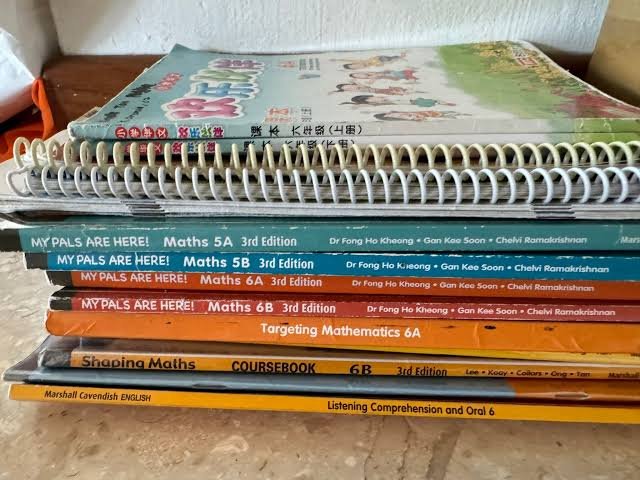
Mathematics books should encourage children to understand concepts and apply them to different types of questions. Depending on the pupil’s level, useful resources may include number operations, fractions, measurement, geometry, and mathematical problem-solving.
Look for a balance between routine exercises and questions that require reasoning. If solutions include explanations, children may find it easier to identify mistakes and understand the steps needed to reach an answer.
Science
Science learning involves understanding concepts, interpreting information, and applying knowledge to unfamiliar situations. Suitable resources may contain diagrams, topic summaries, observation-based questions, and exercises that encourage students to explain their reasoning.
Parents should consider whether a book follows the intended learning level and gives children enough opportunities to practise explaining scientific ideas in their own words.
Mother Tongue Languages
Chinese, Malay, and Tamil resources can support vocabulary development, reading comprehension, sentence construction, and communication skills. Select materials that correspond to the child’s language proficiency and current learning objectives.
A mixture of reading practice, vocabulary activities, and written exercises may provide more balanced support than concentrating on one type of activity.
4. Build a Practical Home-Learning Collection
Buying books online is easier when parents plan their purchases around specific learning goals. Instead of ordering many titles at once, begin with the materials that address the child’s immediate needs.
A simple subject-based plan can help families decide what to purchase first and what can wait until later in the school year.
| Learning goal | Suitable book type | What to check |
| Strengthen basic skills | Foundational workbooks | Clear explanations and gradual exercises |
| Improve examination readiness | Assessment books | Relevant topics and varied question formats |
| Develop reading ability | Reading and comprehension books | Appropriate vocabulary and passage length |
| Practise mathematical reasoning | Mathematics problem-solving books | Questions that develop application skills |
| Revise previously learned topics | Revision guides | Well-organised summaries and practice questions |
| Support language development | Grammar and vocabulary workbooks | Structured activities and suitable difficulty |
This approach helps parents select materials according to purpose. It also reduces the likelihood of purchasing multiple books that provide nearly identical exercises.
Include Revision Materials at the Right Time
Revision books help children review what they have learned throughout the year. It is better to plan revision based on their progress instead of waiting until exams are near.
For children preparing for the Primary School Leaving Examination, PSLE books can help them revise topics, practise exam-style questions, and identify areas that need improvement. Choose books that match your child’s learning level and use them along with school materials.
Encourage children to check their wrong answers and understand their mistakes. This helps them learn better than simply answering many questions.
5. Avoid Common Mistakes When Shopping Online
Although online book shopping offers convenience, a few common mistakes can lead to unnecessary spending or unsuitable purchases.
Buying Too Many Books at Once
Purchasing several workbooks for every subject may seem like a good way to prepare, but children can become overwhelmed if they have too many exercises to complete. An excessive collection may also make it difficult to identify which resources are genuinely helpful.
Begin with a manageable selection and observe how your child uses each book. Additional resources can be introduced when a clear learning need arises.
Ignoring the Difficulty Level
A book that is too easy may not provide enough opportunities for progress, while a resource that is too difficult can reduce motivation. Check sample pages, contents, and learning objectives before making a decision.
When possible, select materials that provide a gradual increase in difficulty. Children can then build confidence before moving towards more challenging questions.
Overlooking the Edition and Format
Some resources are available in different editions or formats. A digital listing may also refer to a downloadable product rather than a printed book.
Read the product details carefully to confirm the format, edition, and intended level. If any information is unclear, contact the seller before paying.
6. Make Online Book Shopping More Cost-Effective
A thoughtful purchasing strategy helps families manage educational expenses while providing suitable learning support.
First, create a list of required and optional materials. Prioritise essential resources and choose supplementary books that address specific learning gaps. Before purchasing, check whether existing workbooks cover similar topics.
Second, compare total costs across sellers, including delivery fees, promotions, and discount conditions. Avoid unnecessary purchases just to qualify for offers.
Third, consider each resource’s usefulness throughout the school year. A well-structured workbook used consistently may offer better value than several unfinished books.
Finally, maintain a record of purchased titles, subjects, primary levels, purchase dates, and learning goals. This helps organise resources and prevent duplicate purchases.
Final Takeaway
Buying educational resources online can help Singapore parents prepare for the school year with greater convenience and flexibility. The most effective approach is to identify learning priorities, compare product details carefully, and select books that match a child’s current abilities instead of focusing on quantity.
A balanced collection of subject workbooks, reading materials, and revision resources can support steady progress when combined with regular practice and thoughtful review. Parents can also explore suitable options from Singapore Asia Publishers as part of their search for educational materials, checking each title against their child’s learning requirements.
Ultimately, successful home learning depends on choosing the right resources and using them consistently. With a clear plan, parents can make informed purchasing decisions and create a supportive environment where children build knowledge, confidence, and independent study habits.
Frequently Asked Questions
1. What should parents consider before buying primary school books online in Singapore?
Parents should check the child’s primary level, subject requirements, learning objectives, book edition, and difficulty level. It is also important to review delivery charges, estimated arrival dates, and return policies before completing an order.
2. How can I choose suitable books for my child’s primary level?
Start by identifying the skills your child needs to develop. Review the book description, sample pages, and contents to see whether the material matches the child’s current abilities. Teacher recommendations can also help narrow down the choices.
3. Are assessment books necessary for every primary school subject?
Not necessarily. Assessment books can provide structured practice, but their usefulness depends on the child’s learning needs. Some pupils may benefit more from foundational workbooks or targeted revision materials before progressing to assessment-style questions.
4. When should children start using PSLE preparation books?
Children can develop useful study habits well before their PSLE year. More focused preparation materials can be introduced according to their learning progress and school guidance. The aim should be to strengthen understanding gradually rather than create unnecessary pressure.
5. How many supplementary books should I buy for each subject?
There is no fixed number that suits every child. Begin with the resources needed to support current lessons and address specific difficulties. Add further books only when the existing materials do not provide sufficient practice or cover the required skills.